In today’s hyper-connected world, reliable Wi-Fi is no longer a luxury but a necessity. From the humble beginnings of 802.11b to the lightning-fast speeds of Wi-Fi 6E and beyond, wireless networking has revolutionized how we communicate, work, and play. This guide delves into the intricacies of Wi-Fi networking, exploring its evolution, components, security protocols, troubleshooting techniques, and future trends.
We’ll unpack the complexities, providing clear explanations and practical advice for both novice users and seasoned professionals.
Understanding Wi-Fi networks involves more than just connecting to a signal. This exploration will cover the underlying architecture, the various technologies that enhance performance and security, and the considerations for designing robust and reliable networks in diverse settings. We’ll also examine alternative networking solutions and compare their strengths and weaknesses against Wi-Fi, providing a holistic perspective on network connectivity.
Introduction to Wi-Fi Networking Solutions
Wi-Fi, a ubiquitous technology shaping modern communication, has undergone a remarkable evolution since its inception. From its early days offering relatively slow data transfer speeds, it has transformed into a high-bandwidth, reliable backbone for countless applications, impacting everything from personal computing and entertainment to sophisticated industrial automation and smart city initiatives. This evolution is characterized by continuous improvements in speed, range, and security, driven by the relentless demand for greater connectivity and capacity.The development of Wi-Fi standards, governed by the IEEE 802.11 standard, has been instrumental in this progress.
Each new generation brings significant enhancements, addressing limitations and expanding possibilities. This has resulted in a wide range of Wi-Fi technologies, each with its own set of characteristics and applications.
Wi-Fi Network Standards and Capabilities
The evolution of Wi-Fi is best understood through the different generations of the 802.11 standard. 802.11a, b, and g were early iterations, offering speeds that were considered groundbreaking at the time, but are now significantly slower by comparison. 802.11n introduced MIMO (Multiple-Input and Multiple-Output) technology, a major leap forward allowing for multiple data streams and significantly increased throughput.
802.11ac, released in 2013, utilized higher frequency bands and advanced modulation techniques to achieve even greater speeds, making it ideal for bandwidth-intensive applications like streaming high-definition video. The latest standard, 802.11ax (Wi-Fi 6), further enhances speed and efficiency through features like OFDMA (Orthogonal Frequency-Division Multiple Access) and MU-MIMO (Multi-User MIMO), enabling better handling of numerous devices simultaneously and improved performance in dense environments.
Each subsequent standard builds upon the previous one, offering increased speed, range, and capacity to meet the ever-growing demands of users and applications.
Benefits of Wi-Fi Networking
Wi-Fi offers numerous advantages over other networking technologies. Its ease of deployment and flexibility are key strengths, allowing for relatively simple setup and configuration in various environments, from homes and offices to public spaces and even outdoor areas with appropriate equipment. The inherent mobility it provides allows users to connect to the network from various locations within range, eliminating the constraints of wired connections.
Cost-effectiveness is another significant benefit, especially when compared to the cost of installing and maintaining extensive wired networks. The widespread availability and compatibility across a vast range of devices further enhances its practicality and convenience. For example, a small business might choose Wi-Fi over Ethernet cabling due to its lower initial investment and ease of expansion as the business grows.
Challenges of Wi-Fi Networking
Despite its many benefits, Wi-Fi networking also presents several challenges. Security remains a significant concern, with the potential for unauthorized access and data breaches. Effective security measures, including strong passwords, encryption protocols (like WPA3), and firewalls, are essential to mitigate these risks. Interference from other devices operating on the same or overlapping frequencies can degrade performance and reduce reliability.
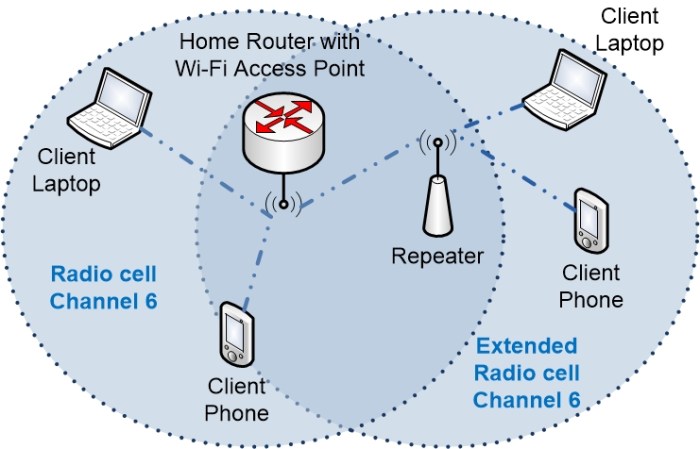
This is particularly prevalent in densely populated areas with numerous Wi-Fi networks operating in close proximity. Furthermore, the range of a Wi-Fi network is limited, requiring strategically placed access points for wider coverage, especially in large buildings or expansive outdoor areas. For instance, a large office building might require multiple access points to provide consistent coverage across all floors, minimizing dead zones and ensuring reliable connectivity for all employees.
Finally, managing and maintaining a Wi-Fi network can be complex, especially in larger deployments, requiring expertise in network administration and troubleshooting.
Mastering Wi-Fi networking requires a blend of technical understanding and practical know-how. This guide has provided a framework for understanding the fundamentals, troubleshooting common issues, and planning for future advancements. By grasping the core concepts and best practices Artikeld here, you can effectively leverage the power of Wi-Fi to create a secure, efficient, and reliable network for your home, office, or any environment requiring seamless connectivity.
The future of Wi-Fi is bright, with emerging technologies promising even greater speeds and capabilities, further enhancing our digital lives.
FAQ Summary
What is the difference between a router and an access point?
A router connects your network to the internet and manages traffic between devices. An access point extends the range of your existing Wi-Fi network.
How can I improve my Wi-Fi signal strength?
Strategies include optimizing router placement, updating firmware, using a Wi-Fi extender or mesh network, and minimizing interference from other devices.
What is the best Wi-Fi security protocol?
WPA3 is currently the most secure protocol, offering enhanced encryption and protection against attacks. Ensure your router supports and utilizes it.
What is Wi-Fi 6E?
Wi-Fi 6E utilizes the 6 GHz band, offering less congestion and faster speeds compared to the 2.4 GHz and 5 GHz bands.


