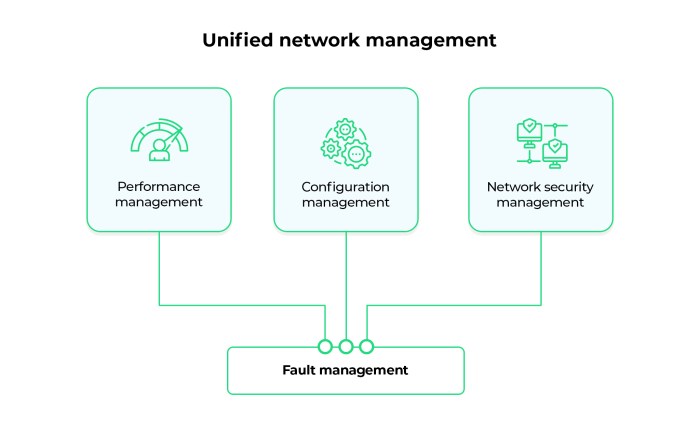
Unified Networking Solutions sets the stage for this enthralling narrative, offering readers a glimpse into a story that is rich in detail and brimming with originality from the outset. It delves into the intricacies of networking solutions, paving the way for a deeper understanding of how businesses can optimize their connectivity.
As we navigate through the realm of Unified Networking Solutions, we unravel the layers of benefits, components, implementation strategies, and future trends that shape the landscape of modern networking.
Introduction to Unified Networking Solutions
Unified Networking Solutions refer to the integration of various networking technologies and services into a single, cohesive system. This approach streamlines communication, data sharing, and overall network management within an organization.Key Components of Unified Networking Solutions:
1. Converged Networks
Converged networks combine voice, data, and video traffic onto a single network infrastructure. This consolidation reduces complexity, improves efficiency, and lowers overall operational costs.
2. Unified Communication Systems
Unified Communication Systems integrate various communication tools such as email, instant messaging, voice calls, and video conferencing into a centralized platform. This allows for seamless communication across different channels.
3. Network Security
Network security is a crucial component of Unified Networking Solutions to protect data and systems from cyber threats. This includes firewalls, encryption, intrusion detection systems, and other security measures.Examples of Unified Networking Solutions in Businesses:
1. Virtual Private Networks (VPNs)
VPNs provide secure remote access to company resources for employees working from different locations. This ensures data privacy and confidentiality while maintaining connectivity.
2. Cloud Computing Services
Cloud computing services offer scalable storage, applications, and computing resources over the internet. Businesses can leverage cloud solutions to enhance collaboration, flexibility, and cost-effectiveness.
3. Voice over Internet Protocol (VoIP)
VoIP technology enables voice communication over the internet, allowing businesses to make calls using IP networks. This reduces communication costs and enhances connectivity across multiple locations.
Benefits of Unified Networking Solutions
Unified Networking Solutions offer numerous advantages for organizations looking to streamline their networking infrastructure and improve efficiency. By integrating different networking components like data, voice, and video into a single platform, organizations can experience enhanced communication, collaboration, and cost savings.
Improved Efficiency and Productivity
Unified Networking Solutions eliminate the need for separate systems for data, voice, and video communication, simplifying management and reducing the complexity of the network. This streamlined approach leads to improved efficiency and productivity as employees can easily access and share information across various communication channels without any barriers.
Cost Savings
Compared to traditional networking approaches that require separate systems and maintenance for each communication channel, Unified Networking Solutions offer cost savings by consolidating resources and reducing operational expenses. Organizations can benefit from lower hardware and maintenance costs, as well as reduced energy consumption through a more efficient networking infrastructure.
Enhanced Collaboration
Unified Networking Solutions enable seamless collaboration among employees by providing a unified platform for communication and data sharing. Real-time communication tools, video conferencing, and shared workspaces can improve collaboration, creativity, and decision-making within the organization, leading to better outcomes and increased innovation.
Scalability and Flexibility
Unified Networking Solutions are designed to be scalable and flexible, allowing organizations to easily adapt to changing business needs and growth. Whether it’s adding new users, expanding to new locations, or integrating new technologies, Unified Networking Solutions provide the flexibility to scale up or down without disrupting operations or incurring high costs.
Real-world Scenarios
Many organizations across various industries have successfully implemented Unified Networking Solutions to improve their communication and networking capabilities. For example, a multinational corporation streamlined its global communication network by integrating voice, data, and video services into a unified platform, resulting in significant cost savings and improved collaboration among employees worldwide. Another scenario involves a healthcare facility that implemented Unified Networking Solutions to enhance patient care through secure and efficient communication between healthcare providers, leading to better outcomes and patient satisfaction.
Components of Unified Networking Solutions
Unified Networking Solutions consist of various elements that work together to streamline and optimize network operations. These components include networking hardware, software, and protocols that enable seamless communication and data transfer across devices. Let’s delve into the different aspects that make up Unified Networking Solutions.
Networking Hardware
- Routers: Devices that forward data packets between computer networks.
- Switches: Used to connect devices within a network and manage traffic efficiently.
- Firewalls: Essential for network security by monitoring and controlling incoming and outgoing network traffic.
- Access Points: Enable wireless devices to connect to a wired network using Wi-Fi.
Networking Software
- Operating Systems: Provide the necessary interface for users to access and manage the network.
- Network Management Software: Helps in monitoring, configuring, and optimizing network performance.
- Protocol Stacks: Sets of networking protocols that define communication rules between devices.
Networking Protocols
- TCP/IP (Transmission Control Protocol/Internet Protocol): Fundamental for data transmission over the internet.
- HTTP (Hypertext Transfer Protocol): Used for transferring web pages over the internet.
- SMTP (Simple Mail Transfer Protocol): Facilitates email communication between servers.
Implementation of Unified Networking Solutions

Unified Networking Solutions can bring significant benefits to organizations, but the implementation process can be complex. Below, we will discuss the steps involved in deploying Unified Networking Solutions, best practices for integrating them into existing network infrastructures, and the challenges that organizations may face during the implementation process.
Steps in Deploying Unified Networking Solutions:
- Assessment of Current Network Infrastructure: Evaluate the existing network setup to identify areas that can benefit from Unified Networking Solutions.
- Planning and Design: Develop a comprehensive plan for implementing Unified Networking Solutions, considering factors like scalability, security, and compatibility.
- Vendor Selection: Choose a reliable vendor that offers Unified Networking Solutions tailored to the organization’s specific needs.
- Installation and Configuration: Deploy the Unified Networking Solutions according to the plan, ensuring proper installation and configuration of hardware and software components.
- Testing and Optimization: Conduct thorough testing to ensure the Unified Networking Solutions are functioning as intended, and optimize performance for maximum efficiency.
- Training and Support: Provide training for IT staff to manage and maintain the Unified Networking Solutions effectively, and establish a support system for ongoing assistance.
Best Practices for Integrating Unified Networking Solutions:
- Collaboration with IT and Business Teams: Ensure close collaboration between IT and business teams to align the implementation of Unified Networking Solutions with organizational goals.
- Gradual Implementation: Implement Unified Networking Solutions in phases to minimize disruptions and allow for adjustments based on feedback and performance evaluation.
- Security Considerations: Prioritize security measures to protect data and networks from potential threats, incorporating encryption and access controls into the implementation.
- Monitoring and Maintenance: Establish monitoring protocols to track the performance of Unified Networking Solutions and schedule regular maintenance to address any issues promptly.
Challenges in Implementing Unified Networking Solutions:
- Compatibility Issues: Integrating Unified Networking Solutions with existing systems may pose compatibility challenges, requiring thorough testing and adjustments.
- Resource Constraints: Limited resources, such as budget and skilled IT personnel, can impede the smooth implementation of Unified Networking Solutions.
- Resistance to Change: Resistance from employees to adapt to new technologies and workflows can hinder the successful deployment of Unified Networking Solutions.
Future Trends in Unified Networking Solutions
As technology continues to advance at a rapid pace, the future of Unified Networking Solutions is being shaped by emerging trends and innovations. These developments have the potential to revolutionize the way networks are designed, managed, and optimized.
Software-Defined Networking (SDN)
One of the key trends influencing the future of Unified Networking Solutions is the adoption of Software-Defined Networking (SDN). SDN decouples the network control plane from the data plane, allowing for centralized management and programmability of network resources. This shift towards software-based networking offers greater flexibility, scalability, and efficiency in network operations.
Intent-Based Networking (IBN)
Another significant trend is the rise of Intent-Based Networking (IBN), which leverages machine learning and artificial intelligence to automate network configuration and optimization based on business intent. IBN simplifies network management, enhances security, and improves overall network performance by aligning network behavior with business objectives.
5G and Edge Computing
The deployment of 5G networks and the proliferation of edge computing are driving the need for more agile and responsive networking solutions. Unified Networking Solutions will need to adapt to support the low-latency and high-bandwidth requirements of 5G applications, as well as the distributed computing environment enabled by edge computing.
Cybersecurity Integration
With the increasing threat landscape and cybersecurity challenges, future Unified Networking Solutions will prioritize integrated security capabilities. This includes embedding security functionalities directly into the network infrastructure, implementing threat intelligence, and leveraging analytics to detect and mitigate security threats in real-time.
NETWORKING SOLUTIONS
Effective networking solutions are crucial for businesses in today’s digital age. They play a vital role in enabling seamless communication and data sharing within an organization, as well as with external stakeholders. By connecting various devices, systems, and people, networking solutions create a reliable infrastructure that supports the smooth flow of information.
Significance of Networking Solutions
- Facilitate real-time communication: Networking solutions enable instant messaging, video conferencing, and VoIP calls, allowing employees to collaborate efficiently regardless of their location.
- Enhance data sharing: With networking solutions, employees can easily access and share files, documents, and resources, leading to improved productivity and decision-making.
- Support remote work: In today’s remote work environment, networking solutions provide the necessary connectivity for employees to work from anywhere securely.
Industries Relying on Networking Solutions
- Telecommunications: The telecommunications industry heavily relies on networking solutions to deliver voice, data, and video services to customers.
- Finance: Financial institutions require robust networking solutions to ensure secure transactions, data privacy, and compliance with regulatory standards.
- Healthcare: Healthcare organizations depend on networking solutions to manage electronic health records, facilitate telemedicine, and enhance patient care through connected devices.
Types of Networking Solutions
Networking solutions come in various types to cater to different business needs and requirements. Let’s explore the differences between wired and wireless networking solutions, as well as the rising popularity of cloud-based networking solutions in today’s business landscape.
Wired Networking Solutions
Wired networking solutions involve physical connections using cables to establish network connections. Here are some key features and functionalities:
- Reliable and stable connection
- Higher security compared to wireless networks
- Generally faster speeds for data transfer
- Less susceptible to interference or signal loss
Wireless Networking Solutions
Wireless networking solutions utilize radio waves to connect devices without the need for physical cables. Here are some features and functionalities:
- Greater flexibility and mobility for users
- Easier to set up and expand network coverage
- Can support a larger number of devices simultaneously
- Potential security risks due to signal interception
Cloud-Based Networking Solutions
Cloud-based networking solutions leverage cloud technology to provide network services and infrastructure. Here are some advantages and considerations:
- Scalability and flexibility for changing business needs
- Centralized management and monitoring of network resources
- Cost-effective as it eliminates the need for on-premises hardware
- Potential concerns regarding data privacy and security in the cloud
Networking Solutions for Security
Networking solutions play a crucial role in ensuring cybersecurity by implementing measures to protect sensitive data and prevent unauthorized access. It is essential to have robust security measures in place to safeguard against potential threats and breaches.
Importance of Implementing Secure Networking Solutions
Implementing secure networking solutions is vital to protect sensitive data from cyber threats and unauthorized access. By establishing firewalls, encryption protocols, and access controls, organizations can mitigate the risk of data breaches and maintain the integrity of their network infrastructure.
- Firewalls act as a barrier between a trusted internal network and untrusted external networks, filtering incoming and outgoing traffic to prevent unauthorized access.
- Encryption protocols help secure data transmission by encoding information in a way that only authorized parties can decipher, ensuring the confidentiality and integrity of sensitive data.
- Access controls restrict user permissions and define who can access specific resources within the network, reducing the likelihood of unauthorized access and potential security breaches.
Examples of Security Breaches Preventable with Robust Networking Solutions
Many security breaches could have been prevented with the implementation of robust networking solutions. One such example is the Equifax data breach in 2017, where hackers exploited a vulnerability in the company’s network to access sensitive personal information of over 147 million customers. By implementing proper security measures such as regular security updates, network segmentation, and intrusion detection systems, organizations can significantly reduce the risk of data breaches and protect their valuable assets.
In conclusion, Unified Networking Solutions emerge as a cornerstone of efficient connectivity, revolutionizing the way businesses operate and communicate in the digital age. By embracing the advancements and adapting to the ever-evolving networking technologies, organizations can pave the path to success in an interconnected world.
Quick FAQs
What are the key components of Unified Networking Solutions?
The key components include hardware, software, and integrated protocols that streamline communication and data sharing.
How do organizations benefit from Unified Networking Solutions?
Organizations benefit from improved efficiency, centralized management, and enhanced scalability offered by Unified Networking Solutions.
What are the future trends in Unified Networking Solutions?
Future trends include advancements in technologies like AI integration, edge computing, and IoT for more robust networking solutions.