With Software-Defined Networking Solutions at the forefront, this paragraph opens a window to an amazing start and intrigue, inviting readers to embark on a storytelling journey filled with unexpected twists and insights.
Software-Defined Networking (SDN) has become the cornerstone of modern networking, offering a paradigm shift in how networks are managed and operated. As industries seek more agile and efficient solutions, SDN emerges as a transformative technology with immense potential. Let’s dive deeper into the world of SDN and explore its impact on network architectures and operations.
Introduction to Software-Defined Networking Solutions
Software-Defined Networking (SDN) is a modern approach to networking that allows network administrators to manage network services through abstraction of lower-level functionality. In traditional networking, network devices have control and data planes tightly integrated, making it complex to manage and configure networks at scale. SDN decouples the control plane from the data plane, enabling centralized control of the network through software applications.
This flexibility and programmability provided by SDN solutions have revolutionized the way networks are designed, operated, and managed.
Key Benefits of Implementing SDN Solutions
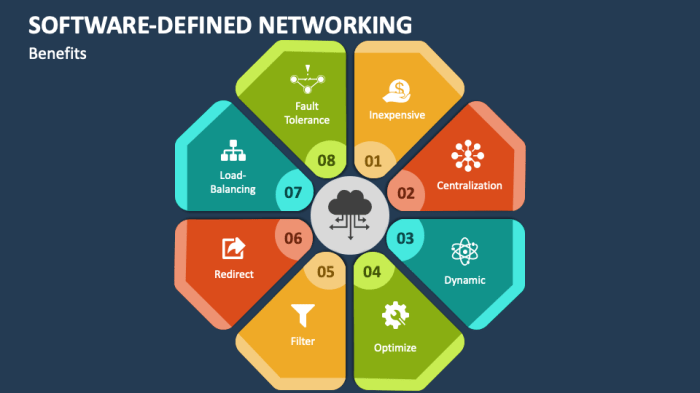
Implementing SDN solutions offers several key benefits:
- Centralized network management: SDN allows network administrators to control and manage the entire network from a centralized controller, simplifying network management tasks.
- Programmability and automation: SDN enables automation of network configuration and provisioning through software applications, reducing manual configuration errors and enhancing network agility.
- Improved network visibility: SDN solutions provide detailed insights into network traffic and performance, enabling better monitoring, troubleshooting, and optimization of network resources.
- Enhanced security: With SDN, network security policies can be centrally defined and enforced across the network, improving overall network security posture.
Revolutionizing Traditional Networking Architectures
SDN solutions are revolutionizing traditional networking architectures by:
- Enabling network programmability: SDN allows network administrators to dynamically adjust network behavior through software applications, making networks more adaptable to changing requirements.
- Facilitating network automation: SDN automates network tasks that were previously manual, reducing operational complexity and accelerating service delivery.
- Optimizing network resource utilization: SDN enables better utilization of network resources by dynamically adjusting network configurations based on real-time traffic demands and application requirements.
Examples of Industries Leveraging SDN for Improved Network Management
Several industries and companies are leveraging SDN for improved network management, including:
- Telecommunications: Telecom operators are using SDN to optimize network performance, enhance service delivery, and support the deployment of new services.
- Data Centers: Data center operators are adopting SDN to streamline network operations, improve resource allocation, and enable rapid scalability of network infrastructure.
- Enterprises: Large enterprises are implementing SDN to enhance network security, simplify network management, and support the deployment of cloud-based applications.
Components of Software-Defined Networking Solutions
Software-Defined Networking (SDN) solutions consist of various components that work together to provide a flexible and efficient network infrastructure. These components include the SDN controller, data plane, and application layer, each playing a crucial role in the overall functioning of an SDN architecture.
SDN Controller
The SDN controller acts as the brain of the network, responsible for managing and controlling network traffic. It communicates with the data plane to instruct how data should flow through the network, enabling centralized control and programmability.
Data Plane
The data plane, also known as the forwarding plane, is responsible for forwarding network packets based on the instructions received from the SDN controller. It ensures efficient data transfer and routing within the network infrastructure.
Application Layer
The application layer in SDN solutions consists of various network applications that leverage the programmability of the SDN architecture. These applications can be used for network monitoring, security, optimization, and other network management tasks.
Virtualization and Automation in SDN
Virtualization and automation are key components of SDN solutions, enabling more efficient network management and resource utilization. By abstracting network resources and automating network configuration and provisioning tasks, SDN solutions can adapt quickly to changing network requirements.
Popular SDN Controllers
There are several popular SDN controllers in the market, each offering unique functionalities and features. Some examples include:
OpenDaylight
An open-source SDN controller that provides a modular platform for developing SDN applications.
ONOS (Open Network Operating System)
A carrier-grade SDN controller designed for service provider networks.
Ryu
A lightweight and easy-to-use SDN controller that is well-suited for research and educational purposes.These SDN controllers play a crucial role in enabling network programmability, scalability, and agility in software-defined networking solutions.
Implementation of Software-Defined Networking Solutions
Implementing Software-Defined Networking (SDN) solutions involves a systematic process of deploying new technologies and configurations within an existing network infrastructure. This transformation enables centralized control, programmability, and automation, offering more flexibility and efficiency in managing network resources.
Deploying SDN Solutions in Existing Network Infrastructure
- Assess the current network infrastructure to identify areas that can benefit from SDN implementation.
- Plan the deployment strategy, considering the specific requirements and objectives of the organization.
- Implement SDN controllers and switches gradually, starting with less critical segments to minimize disruptions.
- Test and validate the functionality of the SDN solutions to ensure proper integration with existing systems.
Challenges and Considerations in Transitioning to SDN
- Legacy systems compatibility and interoperability may pose challenges during the transition phase.
- Security concerns related to centralized control and potential vulnerabilities in the SDN architecture.
- Training and skill development of IT staff to manage and operate SDN technologies effectively.
- Ensuring scalability and performance optimization to meet the evolving network demands.
Best Practices for Integrating SDN Solutions Seamlessly
- Collaborate closely with stakeholders to align SDN deployment with organizational goals and requirements.
- Gradual implementation with proper testing and monitoring at each stage to ensure smooth integration.
- Implement robust security measures to protect against potential threats and vulnerabilities in the SDN environment.
- Regularly update and optimize SDN configurations to adapt to changing network conditions and workload.
Use Cases of SDN Implementation Leading to Significant Improvements
- In a data center environment, SDN implementation improved network agility, efficiency, and resource allocation.
- Telecommunication companies have utilized SDN to enhance service delivery, reduce operational costs, and enable faster provisioning of network services.
- Large enterprises implementing SDN have reported improved network visibility, automation of tasks, and better control over network traffic.
- SDN deployment in academic institutions has facilitated network management, security enforcement, and support for diverse applications and services.
Advantages and Disadvantages of Software-Defined Networking Solutions

Software-Defined Networking (SDN) solutions offer various advantages and benefits, but they also come with some drawbacks and limitations. Let’s explore the pros and cons of using SDN in networking environments.
Advantages of Software-Defined Networking Solutions
- Increased Flexibility: SDN allows for centralized network management, making it easier to adapt to changing network requirements.
- Enhanced Scalability: SDN enables the dynamic allocation of resources, making it easier to scale networks up or down based on demand.
- Improved Network Automation: SDN simplifies network configuration and management through automation, reducing manual errors and enhancing efficiency.
- Better Network Visibility: SDN provides a centralized view of the network, allowing for easier monitoring, troubleshooting, and optimization.
Disadvantages of Software-Defined Networking Solutions
- Complexity: Implementing SDN can be complex and require specialized skills, which may pose challenges for organizations with limited expertise.
- Security Concerns: Centralized control in SDN can create a single point of failure, raising security risks if not properly secured.
- Cost: Initial implementation costs of SDN solutions can be high, including hardware, software, and training expenses.
Performance Comparison with Traditional Networking
- SDN offers better agility and flexibility compared to traditional networking approaches, allowing for faster deployment of new services and applications.
- SDN can optimize network traffic and resource utilization more efficiently, leading to improved performance and reduced latency.
- However, traditional networking may still have advantages in terms of simplicity and reliability in some cases.
Contribution to Network Security and Efficiency
- SDN solutions enable better network segmentation and isolation, enhancing security by controlling access and traffic flow.
- Centralized management in SDN simplifies security policy enforcement and threat response, improving overall network security posture.
- SDN can also lead to more efficient use of network resources, reducing congestion and optimizing traffic flow for better performance.
Emerging Trends in Software-Defined Networking Solutions
Software-Defined Networking (SDN) solutions are constantly evolving to meet the changing demands of modern networking environments. Let’s explore some of the emerging trends in SDN technologies and innovations.
Impact of Artificial Intelligence and Machine Learning
Artificial Intelligence (AI) and Machine Learning (ML) are playing a significant role in shaping the future of SDN. These technologies enable SDN solutions to become more intelligent and adaptive, allowing for automated network management and optimization. AI and ML algorithms can analyze network data in real-time, predict potential issues, and proactively take corrective actions to ensure optimal network performance.
Future Developments in SDN Solutions
The future of SDN solutions is likely to focus on enhancing scalability, flexibility, and security. With the increasing adoption of cloud computing and IoT devices, SDN will need to support a larger number of endpoints while ensuring efficient data transfer and secure communication. Future developments may also include advancements in network virtualization, orchestration, and automation to streamline network operations and improve overall efficiency.
Potential Applications of SDN
SDN is expected to find applications in various industries beyond traditional networking, such as healthcare, finance, and smart cities. In healthcare, SDN can enable efficient data sharing between medical devices and systems, improving patient care and diagnosis. In finance, SDN can enhance security measures to protect sensitive financial data and transactions. Smart cities can benefit from SDN by optimizing traffic flow, managing energy consumption, and improving public safety through smart infrastructure.
Evolution of SDN to Meet Modern Networking Demands
SDN is evolving to address the growing complexity of modern networking environments, including multi-cloud environments, edge computing, and 5G networks. SDN solutions are adapting to support these emerging technologies by providing centralized network control, dynamic resource allocation, and seamless connectivity across distributed systems. The evolution of SDN will continue to prioritize agility, scalability, and security to meet the demands of the digital age.
In conclusion, Software-Defined Networking Solutions present a game-changing approach to network management, offering unparalleled flexibility, scalability, and efficiency. As industries continue to embrace SDN, the future holds exciting possibilities for innovation and growth in the networking landscape.
Expert Answers
What are the key benefits of implementing SDN solutions?
SDN solutions offer increased flexibility, scalability, and efficiency in managing networks, leading to enhanced performance and reduced operational costs.
What are some popular SDN controllers and their functionalities?
Popular SDN controllers include OpenDaylight and ONOS, which provide centralized network control, programmability, and automation capabilities.
How does SDN contribute to network security and efficiency?
SDN enhances network security by enabling dynamic policy enforcement and network segmentation, while improving efficiency through centralized management and automation.