
With Networking Security Solutions at the forefront, this paragraph opens a window to an amazing start and intrigue, inviting readers to embark on a storytelling casual formal language style filled with unexpected twists and insights.
Networking security solutions play a crucial role in safeguarding modern IT infrastructures from cyber threats, ensuring data protection and secure communication channels. As technology advances, the need for robust security measures becomes increasingly vital to combat sophisticated cyber attacks. Explore the world of networking security solutions and discover how they are transforming the digital landscape.
NETWORKING SECURITY SOLUTIONS
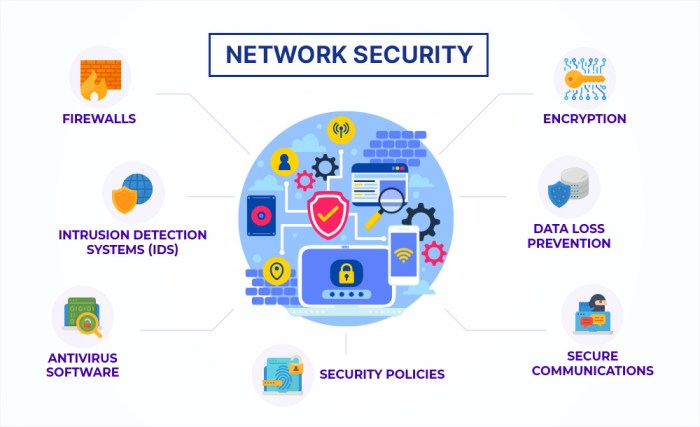
Implementing networking security solutions is crucial in modern IT infrastructures to protect sensitive data, prevent unauthorized access, and safeguard against cyber threats. These solutions help organizations maintain the integrity, confidentiality, and availability of their network resources.
Common Types of Networking Security Solutions
- Firewalls: Act as a barrier between internal and external networks, filtering incoming and outgoing traffic based on predefined security rules.
- Virtual Private Networks (VPNs): Securely connect remote users or branch offices to the main network over the internet, encrypting data to ensure confidentiality.
- Intrusion Detection Systems (IDS) and Intrusion Prevention Systems (IPS): Monitor network traffic for suspicious activity and can either alert administrators or take action to block potential threats.
- Antivirus and Antimalware Software: Detect and remove malicious software to prevent malware infections on network devices.
Hardware-based vs. Software-based Networking Security Solutions
Hardware-based networking security solutions typically involve dedicated appliances like firewalls and routers, providing robust protection but may require higher initial investment. On the other hand, software-based solutions are more flexible and can be installed on existing hardware, offering cost-effective options with potential scalability limitations.
Effective Networking Security Solutions for Small Businesses
- Unified Threat Management (UTM) Appliances: Combine multiple security features like firewalls, VPNs, antivirus, and intrusion detection in a single device for simplified management.
- Endpoint Protection Software: Secure individual devices like laptops and smartphones to prevent malware infections and data breaches.
- Security Awareness Training: Educate employees on best practices for recognizing and avoiding phishing attacks, social engineering scams, and other common security threats.
NETWORKING SOLUTIONS
Networking solutions play a crucial role in enhancing communication and data transfer within organizations. By providing a structured framework for devices to connect and interact, these solutions enable seamless sharing of information and resources among employees, departments, and locations.
Benefits of Efficient Networking Solutions for Remote Work
- Improved collaboration: Remote workers can easily communicate and collaborate with colleagues through secure networking solutions, fostering teamwork and productivity.
- Enhanced flexibility: Employees have the freedom to work from any location with access to necessary resources, promoting a healthy work-life balance.
- Cost savings: Reduced travel expenses and office space requirements lead to cost savings for organizations implementing efficient networking solutions for remote work.
- Scalability: Networking solutions can easily accommodate the changing needs of a remote workforce, allowing organizations to scale their operations accordingly.
Components of a Robust Networking Solution for High-Traffic Websites
- Load balancers: Distribute incoming network traffic across multiple servers to prevent overload and ensure optimal performance.
- Firewalls: Protect the network from unauthorized access and potential security threats, safeguarding sensitive data and information.
- Content Delivery Networks (CDNs): Cache content closer to users to reduce latency and improve website loading speeds, especially for global audiences.
- Intrusion Detection/Prevention Systems (IDS/IPS): Monitor network activity for suspicious behavior and take proactive measures to prevent cyberattacks.
Best Practices for Optimizing Networking Solutions
- Regular performance monitoring: Keep track of network performance metrics to identify bottlenecks or issues that may impact connectivity.
- Implement Quality of Service (QoS): Prioritize network traffic based on importance to ensure critical data transmission without interruptions.
- Update software and firmware: Stay current with the latest updates and patches to address vulnerabilities and enhance network security.
- Segment networks: Divide networks into smaller segments to improve efficiency, security, and manageability of network traffic.
In conclusion, Networking Security Solutions are the foundation of a secure and resilient IT environment. By understanding the importance of implementing these solutions, businesses can fortify their networks against potential threats and vulnerabilities. Stay informed, stay protected, and stay connected with the power of Networking Security Solutions.
Question & Answer Hub
What are the key benefits of networking security solutions?
Networking security solutions help in safeguarding sensitive data, preventing cyber attacks, ensuring secure communication, and maintaining the integrity of IT infrastructures.
How do hardware-based and software-based networking security solutions differ?
Hardware-based solutions involve physical devices like firewalls and routers, while software-based solutions rely on programs and applications to secure networks. Each has its unique advantages and limitations.